Miracle-Ear
- 4.6
- Rating
- 50.00K
- Installs
- Free
- Price

 Analysis by App-foxy
Miracle-Ear presents itself as a personalized hearing companion, and after spending time with it, I found that its value depends less on flashy extras and more on how smoothly it fits into the moments when hearing support matters. It is a free medical app from Miracle-Ear, aimed at people who already use or are considering the company’s hearing products and want a more convenient way to stay connected to that experience.
The app is available to an Everyone audience, which makes its presentation approachable rather than clinical. Its average rating sits at 4.4 from around 3,000 ratings, and it has passed 50,000 installs. Those figures suggest a modest but meaningful user base, although I would still judge it by whether it helps with my own daily routine rather than treating popularity as proof that it will suit every hearing situation.
How the app feels in everyday hearing routines
My first impression was that Miracle-Ear works best as a companion rather than as a replacement for professional hearing care. That distinction is important. An app can make a hearing device easier to live with, but it cannot take the place of a hearing assessment, a properly fitted device, or advice from a hearing specialist. I would use this as part of a broader hearing routine, not as a standalone solution for unexplained hearing difficulty.
You May Also Like

 Blood Strike: 2.5 Anniversary
Blood Strike’s Loadouts Turn Every Drop Into a Tactical Gamble
A close look at Blood Strike’s custom loadouts: how fast access to signature weapons reshapes its battle royale rhythm, rewards preparation, and narrows the gap between fights.

 Pandora - Music & Podcasts
Pandora’s Music Is Easy to Start, but Harder to Recover
Pandora’s strength is its low-effort path from a seed to a station. Its weak spot is how much confidence it asks you to place in connection, setup, and quiet recovery.

 8 Ball Pool
 Is Built on Rivalries, Rematches, and Routine
A close look at the rivalries, rematches, shared routines, and unanswered safety questions that turn a quick pool match into a persistent mobile community.

 Samsung Music
’s Quiet Strength Is Playing What You Already Own
Its reach comes less from spectacle than from dependable access to a personal library. That simplicity is both the app’s strongest retention engine and its ceiling.

 AccuWeather: Weather Radar
AccuWeather Review: A Quick, Clear Forecast for Everyday Decisions
For everyday plans, the best forecast is the one you can understand quickly. AccuWeather makes rain timing, radar, and local conditions easy to act on, with a few trade-offs.

 Hill Climb Racing
Why Hill Climb Racing Still Turns Crashes Into One More Run
A tiny car, a bumpy hill and one more upgrade: Hill Climb Racing keeps resurfacing because its simple chaos makes every near-miss feel personal.
More From Our News Desk
View All News


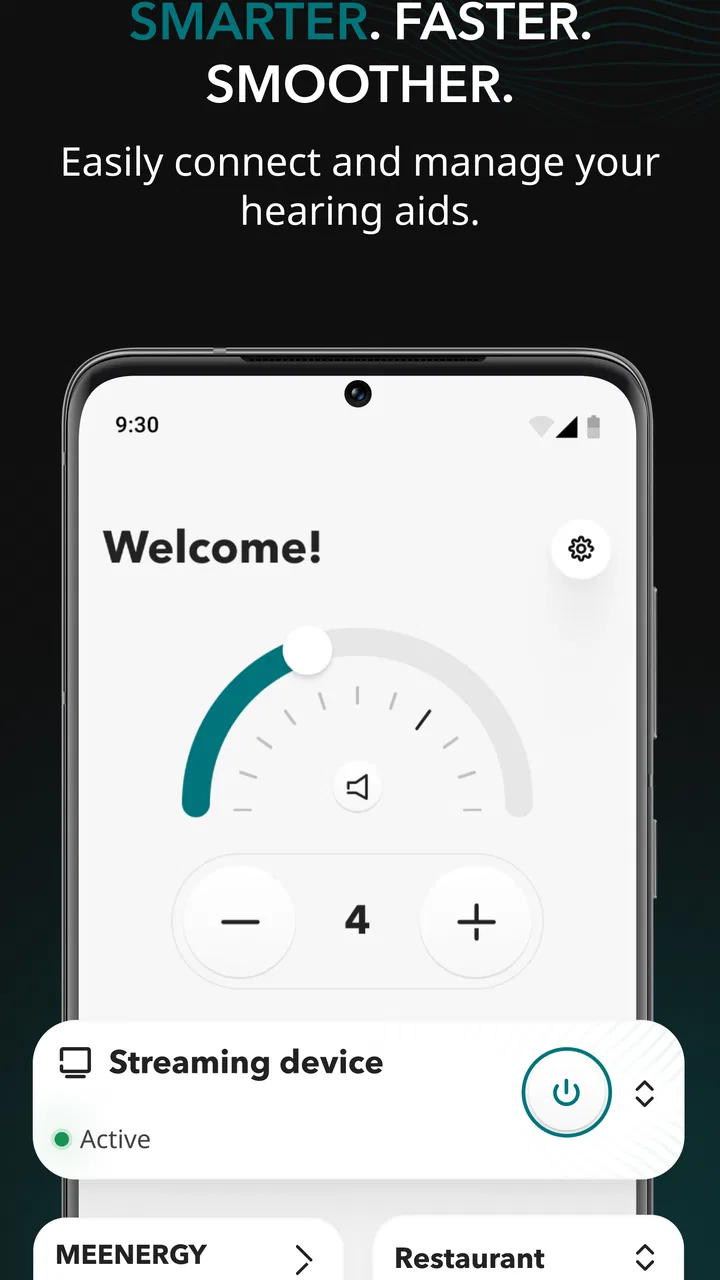
The most useful way to think about it is in terms of transitions. Hearing needs can change when I leave a quiet room, enter a busy street, sit in a café, or join a conversation with several people. A companion app has the potential to make those transitions less disruptive, especially when I have my phone nearby and want to interact with my hearing setup without reaching for small controls. That convenience is the central reason I would recommend trying it.
There is also a psychological benefit to having hearing-related controls and information in a familiar device. Many people are more comfortable navigating a phone than handling tiny buttons or remembering a sequence of taps on a hearing aid. For an older family member, the phone may also make it easier for a trusted person to help with the basic routine, provided that person is present and the relevant equipment is compatible.
When connectivity becomes part of the experience
The app’s usefulness is naturally tied to communication between the phone and the hearing setup. That means connectivity is not a minor technical detail; it shapes whether the app feels helpful at the moment I need it. If the phone and hearing equipment are communicating properly, the experience can feel much more direct than searching through physical controls. If that connection is interrupted, the app becomes less central and I may need to return to the controls on the hearing device itself.
I would therefore treat a stable connection as part of the preparation, not something to troubleshoot for the first time during an important conversation. Before leaving home, I would open the app briefly, check that the hearing equipment is recognized, and confirm that the phone has enough battery for the outing. This small habit is more valuable than waiting until a noisy restaurant or crowded station exposes a problem.
That network-related wording needs a little care. The phone may need communication with the hearing system or online services for particular parts of the experience, but I would not assume that every function behaves identically when the internet is unavailable. If I expected to spend time in an area with weak mobile service, I would test the exact actions I plan to use before leaving rather than relying on an untested assumption about offline behavior.
This is one of the app’s less obvious trade-offs. A phone-based hearing companion can make adjustments feel more accessible, but it also adds another link to the chain: hearing equipment, phone settings, wireless communication, and possibly an internet connection. The convenience is real, yet it comes with more points where a user may need to check what is happening.
Using it away from home
Miracle-Ear makes the most sense to me in mobile contexts where I want discretion. On a walk, I can keep my phone in my hand or pocket instead of drawing attention to a small hearing device. In a shop, I can make a quick check without stopping to manipulate hardware. At home, I can take more time, but outside, the reduction in fuss is the stronger advantage.
A realistic example is a family lunch. At the start, the room may be quiet enough, but once several conversations begin, I may notice that following one person becomes harder. I would rather make a considered adjustment through a familiar phone interface than repeatedly ask people to speak louder. The app cannot solve every acoustic problem, especially when several voices overlap, but it can make the response less awkward and more immediate.
Another useful situation is travel between environments. Moving from a calm hotel room to a busy lobby, then outside beside traffic, can expose weaknesses in a hearing routine. I would use the app before each transition, not because I expect a perfect automatic solution, but because a quick check can prevent me from discovering a communication problem halfway through a conversation.
Phone placement matters more than many first-time users expect. If the phone is buried in a bag, low on battery, or busy with another task, the app is less convenient. I would keep it accessible during the first few days and learn which actions genuinely help me. After that, I could avoid turning every change in surroundings into a phone-management task.
This is also where I see a clear boundary. Someone who wants a completely independent hearing solution without carrying or checking a phone may prefer a simpler setup based mainly on the controls built into the hearing equipment. Miracle-Ear is better for people who accept the phone as part of their hearing routine and value the extra layer of control or guidance.
What happens when the connection fails
No connected hearing experience is perfect all the time. A phone may fail to recognize the equipment, wireless communication may drop, or a setting may not behave as expected after the phone has been updated or restarted. I would not consider those possibilities a reason to reject the app, but I would consider them a reason to prepare a fallback routine.
My practical approach would be simple: first check that the hearing devices are powered, then confirm that the phone’s wireless connection is active, and finally reopen the app if needed. If that does not help, I would restart the phone or follow the manufacturer’s normal reconnection process. The important point is not to keep tapping randomly. A short, repeatable sequence is easier to remember, especially when I am already stressed by missing part of a conversation.
I would also learn the physical controls on the hearing equipment instead of depending entirely on the app. That is a genuinely important tip. The app can be the comfortable interface for normal use, but the hardware should remain the emergency fallback when the phone is unavailable, the battery is low, or the connection is temporarily unreliable.
Recovery is easier when I test it in a calm environment. I would deliberately close the app, move the phone away for a moment, and reconnect at home rather than discovering the process during a medical appointment. This kind of rehearsal is not exciting, but it turns a vague fear of failure into a known procedure.
There is another subtle limitation: a successful connection does not necessarily mean that the listening environment is solved. If speech is still difficult in a crowded room, I would not keep adjusting blindly. I would move closer to the speaker, reduce background noise where possible, ask for better positioning, or seek professional help if the issue continues. An app can support a hearing routine, but it should not encourage endless self-adjustment when the underlying fit or hearing needs require attention.
Being sensible with mobile data and battery
Because this is a connected mobile companion, I would include it in ordinary phone housekeeping. I would keep the app updated through the normal store process, but I would avoid making an update immediately before an important event. Testing it afterward is sensible, especially if the phone has changed its wireless behavior or reset permissions.
Battery planning is equally practical. Hearing equipment and phones both depend on power, and the app cannot be useful if the phone is nearly empty. Before a long day, I would charge the phone and carry the hearing equipment’s usual charging solution or backup arrangement. This is not a criticism unique to Miracle-Ear; it is the cost of choosing a phone-assisted workflow over a purely manual one.
For data-conscious use, I would connect to a trusted network when setting up or checking any online-dependent part of the experience, rather than assuming every task should happen over mobile data. I would also review the phone’s battery and data settings if the app seems unusually demanding. Without making assumptions about its exact background behavior, the sensible rule is to notice patterns on my own device instead of granting unlimited trust to any connected app.
Privacy deserves the same calm, practical attention. Hearing-related information can feel personal, so I would read the app’s permission prompts and privacy explanations carefully and allow only what I understand and need. I would not install it on a shared phone without considering who can open the device. A hearing companion should make daily life easier, but convenience should not mean ignoring basic control over personal information.
One useful workflow is to separate setup from everyday use. I would complete the initial pairing and account-related steps at home, with good battery levels and time to troubleshoot. Once the routine is familiar, I would use the app more selectively while out. This reduces the amount of mobile data, attention, and patience required during the moments when I most want to focus on people rather than technology.
Who will get the most from it
I think Miracle-Ear is most appealing to people who already use compatible Miracle-Ear hearing equipment and want their phone to become a more natural part of managing it. It may also suit someone who finds small physical controls difficult, prefers visual guidance, or wants a family member to understand the basic routine well enough to offer practical help.
It is also a reasonable choice for users who move between several listening environments during the day. The benefit is not that every environment becomes effortless, but that the user has a familiar place to check and manage the hearing experience. That can reduce the friction of switching from quiet home listening to a more demanding public setting.
I would be more cautious if I were looking for a general hearing test, a diagnostic tool, or a substitute for an audiologist. The medical label should not create unrealistic expectations. If hearing has changed suddenly, one ear is affected differently from the other, or ordinary conversation remains difficult despite using the app and hearing equipment, professional evaluation is the better next step.
I would also skip it if I did not own compatible Miracle-Ear equipment or did not want to involve a smartphone. In that case, the app may add complexity without solving the main problem. A conventional hearing-aid workflow, direct specialist support, or a different manufacturer’s companion app could be a better match depending on the equipment already in use.
How it compares with simpler alternatives
Compared with relying only on physical hearing-aid controls, Miracle-Ear offers a more approachable phone-centered experience. The advantage is visibility and familiarity; the drawback is dependence on the phone and its connection. Physical controls remain quicker when the phone is out of reach, while the app is more comfortable when I want to see what I am doing.
Compared with generic sound-amplification apps, this feels like a more relevant option for people inside the Miracle-Ear ecosystem. A generic app may appear attractive because it does not require a particular hearing-device relationship, but it is not automatically a substitute for properly fitted hearing equipment. I would choose a manufacturer companion when my priority is managing compatible hardware, and I would avoid treating a basic amplification app as medical care.
Compared with visiting a hearing professional, the app is obviously more convenient for small day-to-day interactions, but it is much narrower in purpose. A professional can assess changes in hearing, examine fit, and make informed recommendations that a phone interface cannot replace. The best comparison is not app versus specialist; it is app for routine convenience alongside professional care when the situation calls for it.
The strongest trade-off is therefore clear: Miracle-Ear can reduce everyday friction, but it asks me to accept a connected workflow. Users who value control through a phone will likely see that as a benefit. Users who want fewer devices, fewer settings, and no connection-related troubleshooting may find the traditional approach calmer.
Version, cost, and the overall experience
The app is free, which makes trying it less of a financial commitment than buying a separate utility simply to explore a companion workflow. Its current version is 5.2.5(3), and it requires operating system version 9 or later. Those details are worth checking before installation, particularly on an older phone that may not receive recent system updates.
Miracle-Ear was released on July 7, 2025, so I would approach it as a relatively recent entry in my mobile routine rather than as a long-established replacement for every hearing-related service. The developer is Miracle-Ear, which gives the app a clear connection to the company’s own products and support context.
My opinion is positive but measured. The app’s strongest quality is not entertainment or novelty; it is the possibility of making hearing-device interaction feel less technical in ordinary life. Its weaknesses come from the same design choice. A phone can be easier than tiny controls, but it can also be misplaced, uncharged, disconnected, or distracting at the wrong moment.
The best way to use Miracle-Ear is as a convenience layer, not as your only safety net. I would set it up carefully, test it before relying on it in public, keep the physical controls familiar, and pay attention to whether it genuinely improves conversations rather than simply giving me more settings to adjust.
For the right user, that balance makes the app worthwhile. Someone already using compatible Miracle-Ear hearing equipment, carrying an Android phone that meets the requirement, and wanting a clearer mobile routine should give it a serious try. Someone seeking diagnosis, universal compatibility, or a completely phone-free experience should look elsewhere or speak with a hearing professional first.
In the end, Miracle-Ear succeeds when connectivity stays in the background and lets me focus on listening. When the connection is stable, the phone is ready, and expectations are realistic, it can make everyday hearing management feel more approachable. When those conditions are not met, its limits become visible quickly. That makes it a useful companion for a specific audience, rather than a universal answer to every hearing need.
FAQs for Miracle-Ear
01What features does the Miracle-Ear app offer?
The Miracle-Ear app provides a range of features designed to enhance your hearing experience. These include personalized sound settings, remote control functionalities, and access to support and troubleshooting. The app also offers hearing aid battery alerts and appointment scheduling with your Miracle-Ear hearing care professional. It’s designed to be user-friendly and accessible.
02Is the Miracle-Ear app compatible with all hearing aids?
The app is compatible with a wide range of Miracle-Ear hearing aids, but not all models. It is essential to check the specific compatibility of your hearing aid model with the app before downloading. Compatibility ensures you can fully utilize the app’s features, such as adjusting volume and changing programs remotely.
03How secure is my personal information on the Miracle-Ear app?
Security is a top priority for the Miracle-Ear app. The app uses encryption protocols to protect your personal data. However, it’s always advisable to regularly update the app and your device’s security settings to safeguard your information further. The app does not share personal data with third parties without consent.
04Can I use the Miracle-Ear app without a Miracle-Ear hearing aid?
No, the Miracle-Ear app is specifically designed to work with Miracle-Ear hearing aids. It provides functionalities that allow users to control and customize their hearing aids. Without a compatible Miracle-Ear device, you won’t be able to utilize the app’s intended features effectively.
05What should I do if I encounter issues with the Miracle-Ear app?
If you experience any problems with the Miracle-Ear app, first ensure that your app and device are updated to the latest versions. If issues persist, you can reach out to Miracle-Ear support through the app or visit the nearest Miracle-Ear center. Comprehensive support is available to help resolve any technical difficulties.
Pros
- User-friendly interface for easy navigation.
- Customizable sound profiles for different needs.
- Real-time hearing health tracking feature.
- Seamless Bluetooth connectivity with devices.
- Comprehensive customer support options.
Cons
- Limited free features
- requires subscription.
- Occasional connectivity issues reported.
- Setup process can be time-consuming.
- Advanced features may overwhelm beginners.
- Requires frequent updates for optimal use.

Miracle-Ear
Gallery